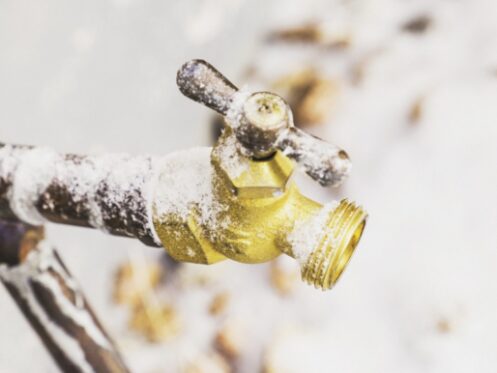
During the winter, temperatures can drop significantly and cause pipes to freeze in your home. This can result in a messy outcome, including low water pressure or even worse… burst pipes. As we enter the cold season, frozen pipes become a reality for many Americans living in snowy areas such as Utah. However, there are some things you can do to help avoid having your pipes freeze and avoid a big headache for you.
-
Identify the Water Main Shut Off Valve
Do you know where the main shut-off valve is in your home? This is critical to know in case something goes wrong with your pipes, and you need to shut the water off completely to stop the flow. This is not only a good tip for winter, but for any time. So, learn where your main shut-off valve is and how to turn it off. If the valve handle is faced parallel to the pipe when the water is on, to shut it off, you would turn it to a 90-degree angle or perpendicular to the pipe.
-
Identify Water Hoses from Exterior Faucets
Leaving a water hose connected to your house can prevent water from being able to drain out of the hose-bib (outside faucet) going into the house and cause problems if it freezes in the line. If you have a line inside the house feeding your sprinkler system, you will want to shut off and drain that as well.
-
Add Covers to Your Exterior Faucets
For only a few bucks and a quick drive to your hardware store, you can purchase covers for your faucets on the exterior of your home – they even can be ordered on Amazon. These are often referred to as freeze caps, faucet covers, or hose bib covers and are made from either Styrofoam, insulated nylon, or plastic. They help insulate your outside faucet area and help keep it from freezing.
-
Keep Thermostat Set Above 55 Degrees
Even if you’re planning on being gone for an extended period, keep your thermostat at 55 degrees or higher. Never turn it off completely or it can cause the inside of your home to be cold and allow pipes to freeze that otherwise might not.
-
Keep Cabinet Doors Open Under the Sink
The space under sinks can get very cold, especially in basements or along exterior walls. Keep them open when temps are low. This helps the warm air in the room circulate through the water pipes.
-
Let Faucets Trickle on the Coldest Nights
Keep the hot and cold valves slightly open to keep water flowing on really cold nights. It should be just a trickle (more than a drip) but not a lot of water flowing. Also, the water shouldn’t be left on for a long time.
-
Keep Your Garage Door Closed
If you have a garage with water pipes running through it, keep the garage door closed as much as possible to keep cold air from coming inside and make the overall temperature in the garage lower.
-
Seal Air Leaks
Cold air can get in around doors and windows. Using caulking or insulation can help reduce heat loss from those areas. Also, insulating attics, crawlspaces, and basements is a good idea to help keep temperatures consistent.
-
Install Pipe Sleeves or Heat Cable
Cold air can get in around doors and windows. Using caulking or insulation can help reduce heat loss from those areas. Also, insulating attics, crawlspaces, and basements is a good idea to help keep temperatures consistent.
If despite doing any of these tips, your pipes do become frozen, call a licensed plumber to come to take a look at them. Sometimes, after a pipe is thawed, some leaks are dered. Leaks can cause detrimental plumbing problems and result in harmful mold. A homeowner must employ a professional plumber to fix leaks as soon as they arise. Additionally, a plumber can keep the drain clean so that the drains do not cause any additional problems.
During the winter season, it can be tricky to keep a home from falling victim to the cold weather’s consequences including frozen pipes; however, this can be prevented with some of these helpful tips and the services that a professional expert plumber offers.


