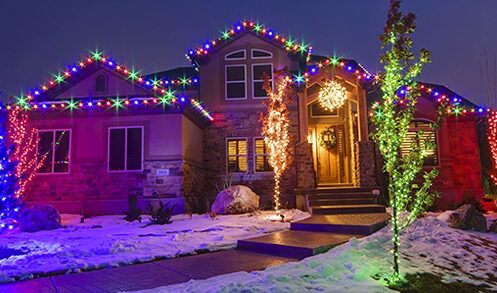
Christmas lights are a lot of fun to see on all the trees, houses, and yards for decorations during the holiday season. They bring a lot of joy to everyone. But some things should be thought about to make sure that your lighting is done safely.
We had our Electrical department managers discuss their thoughts on precautions to take when decorating with Christmas lights in your home on a recent In the House podcast episode – 040: Christmas Lights. Click below to listen to it or watch it on YouTube.
Think About Safety
-
Avoid Putting Light Plugs in Rain Gutters
It’s not a smart idea to put the plugs in the gutters to hide them when plugging in your Christmas lights outside along a roof. Our electricians see this happen too often and have even had to chip some out of ice. Just don’t do it.
-
GFCI Protection
For outdoor Christmas lights, you want to make sure that you are plugging them into a GFCI-protected outlet because water and debris can get into them and you want to reduce the risk of shorts and shocks. Look for outlets that have a test and reset button on them. Water is a great conductor of electricity and unfortunately, when you’re wet you become a good conductor of electricity too and there’s a risk of electrocution.
-
Condition of Light Strands
Some people put them up year after year after year. Especially for outdoor lights sun and cold outside can be very damaging to the cords. Inspect the strands of lights before you put any Christmas lights up for damage or exposed wires, especially outside ones. If you can bend the wires and they’re brittle and crack, don’t use them. If they’re not in good shape, it’s not worth using them on or in your house.
-
Outlet Has Enough Power
When it comes to Christmas lights sometimes less is more. It’s easy to overload a circuit and you want to make sure you aren’t plugging too many items into an outlet or an extension cord. If you’re pulling too much power, the breaker for that outlet should trip.
So, be smart about how many strands you put together, especially when plugging them into an extension cord and don’t plug in too many and overdo it. Many fires are caused by small extension cords with too many things plugged into them.
-
Extension Cords
To go along with #4, when using extension cords to plug your Christmas lights into (both indoors and outdoors) make sure that you are using an adequate size for your lighting and keep an eye on them as they can occasionally overheat. Touch the cord and if it’s hot, unplug it.
Pro Tip: Extension cord sizes are done a bit differently and so the smaller the number means the bigger the gauge. So, a 12 gauge wire is bigger and will be more expensive than a 16 gauge one. The more strands you’re going to have connected, the larger the gauge of extension cord you will need.
-
Electrical Panel is Safe
Pulling too much power from your electrical panel and not having breakers trip can be a dangerous thing. There are some older brands of panels that have lost their safety rating because the breakers would not trip when they were supposed to. Look at the brand of the panel you have and if you have an older Zinsco or Federal Pacific, Google those panels online and see some of the safety issues they have.
Although Christmas lights are a lot of fun and bring a lot of joy during the holidays, it’s important to think about safety when using lights indoors and outdoors at your home so that you can avoid mishaps and unneeded stress for you or your loved ones.
As always, if you ever feel like you’ve gotten in over your head, stop and call a technician that you trust for some help. If you’re in the Utah market, consider calling Any Hour Services, Electrical, Plumbing, Heating & Air.


