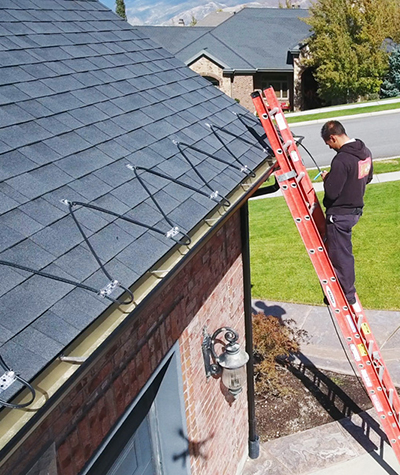
Electrical heat cable installation
The cold and snowy winters commonly cause the build-up of heavy snow and ice on residential roofs. Ice dams can form when snow doesn’t melt off of a roof quickly enough and it can lead to roof damage and costly repairs if not addressed.
Neglected ice dam buildup can result in any of the following costly situations:
- Roof leakage
- Expansion and swelling roof shingles
- Mold accumulation
- Buildup of sharp and dangerous icicles
Roof Heating Cable (also known as roof heat tape) is a system of electrical heating elements that run through gutters and other rooftop areas. Heat tape keeps your roof warm in the winter, effectively preventing the buildup of ice and snow. By installing a heat cable system on your roof, you afford yourself a complete sense of security against costly water damage and/or accidents.
How Any Hour Services, Electrical, Plumbing, Heating & Air can help with your electrical needs
Any Hour Services, Electrical, Plumbing, Heating & Air started as an Electrical company in 1961. Today, our electricians help thousands of homeowners with electrical projects in their homes. Any Hour Services, Electrical, Plumbing, Heating & Air wants you to feel comfortable having our electricians in your home.
- Respect you, your home, and your time
- Listen to ensure we understand your unique situation
- Help you understand what options are available
- Present you with a price before the work begins
- Happily perform the work you choose
- Licensed, certified, bonded and insured
- Background-checked and drug-tested
- Technically competent and proficient
- Up-to-date on the latest safety codes and industry standards
- Trustworthy in your home and around your family
What causes ice dams?
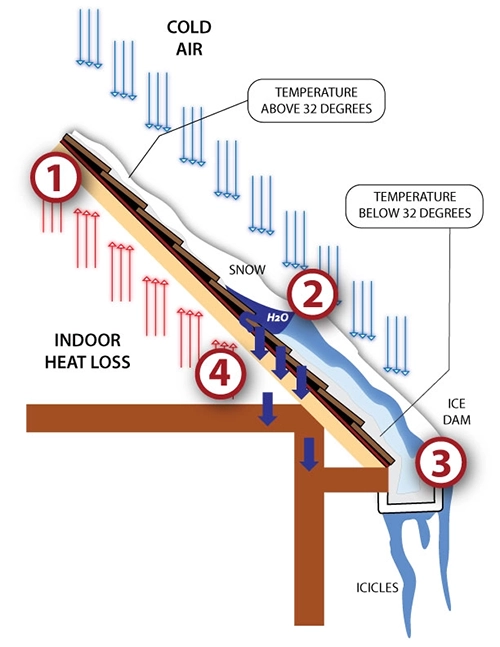
An ice dam is a ridge of ice that forms at the edge of a roof and prevents melting snow from draining off. The water that backs up behind the dam can leak into a home and cause damage to walls, ceiling insulation, and other parts of the house.
An ice dam might form when…
- There is snow on the roof
- Average outside temperature is below 32°
- Roof surface temperature is above 32° at its higher end and below 32° at its lower end.
How it forms
- Indoor heating rises through the ceiling into the attic and warms the roof surface
- Snow on the warmer part of the roof melts and flows down until it reaches the part of the roof that is below 32°. Water freezes into an ice dam.
- The dam grows as it is fed by melting snow above, causing a backup of warmer, liquid water above.
- Eventually, the water finds cracks in the roof covering and flows into the attic, where it can seep through the ceiling and interior walls.
Committed to Customer Service
We’ll never rush you into a decision but will take the time to help you understand your electrical problem. There’s no such thing as too many questions. We know you have lots of choices as far as electricians. We want to help and hope you will allow us to prove the things listed above are not just a list on a website but the way we strive to do business.


